
21 Aug 2026
Precision grading means cutting and filling ground to a design surface within a tight tolerance, often a few centimetres or less, so that pads, roads, drainage and foundations sit exactly where the plan calls for them. For decades that accuracy depended on stringlines, grade stakes, tape measures and repeated survey checks. GPS grade control replaces much of that manual work by putting the design surface, the machine's blade or bucket position, and the remaining cut or fill on a screen inside the cab. This guide explains what precision grading is, how GPS grade control works, and how it changes daily work for dozers, excavators and graders.
Grading is precise when the finished surface matches the design model closely enough that no rework is needed. On a well controlled site the operator can hold grade to within a few centimetres across an entire pad or road, follow the correct slope for drainage, and reach the right depth for sub-base and utilities without stopping to check stakes.
Accuracy at this level matters because every error carries a cost. A pad graded too low collects water and has to be built back up. A road graded too high has to be recut, and the extra material has to be hauled away. Each additional pass burns fuel and hours, and on projects with narrow weather windows a day lost to rework can push back every trade that follows. Precise grading protects the schedule, the material budget and the quality of the finished surface all at once.
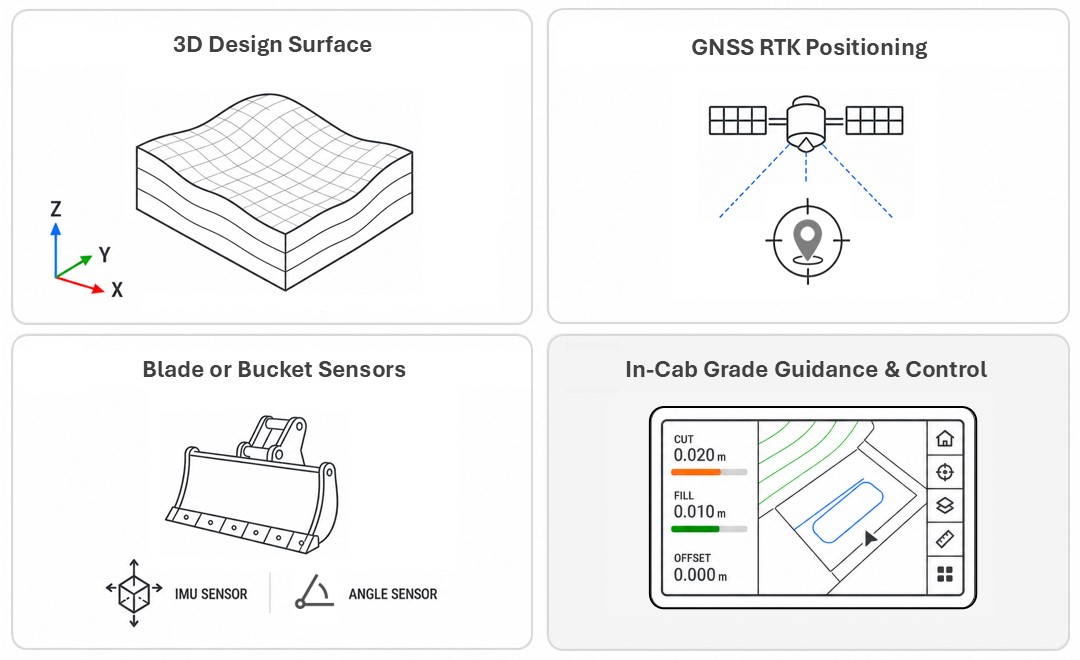
A GPS grade control system brings three things together: a design surface to build to, a positioning source that knows where the machine is, and guidance at the cutting edge that tells the operator how far there is left to go.
The job starts as a three dimensional model rather than a set of stakes. A CAD design or surface model is loaded into the in-cab controller and tied to the site coordinate system, so the target elevation and slope are defined for every point the machine can reach. Because the model lives in the cab, the operator can also create or edit a surface in the field for localised work such as a drainage swale, without waiting for the survey crew to set new marks.
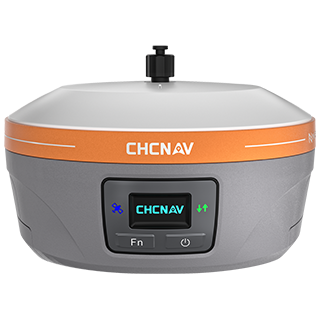
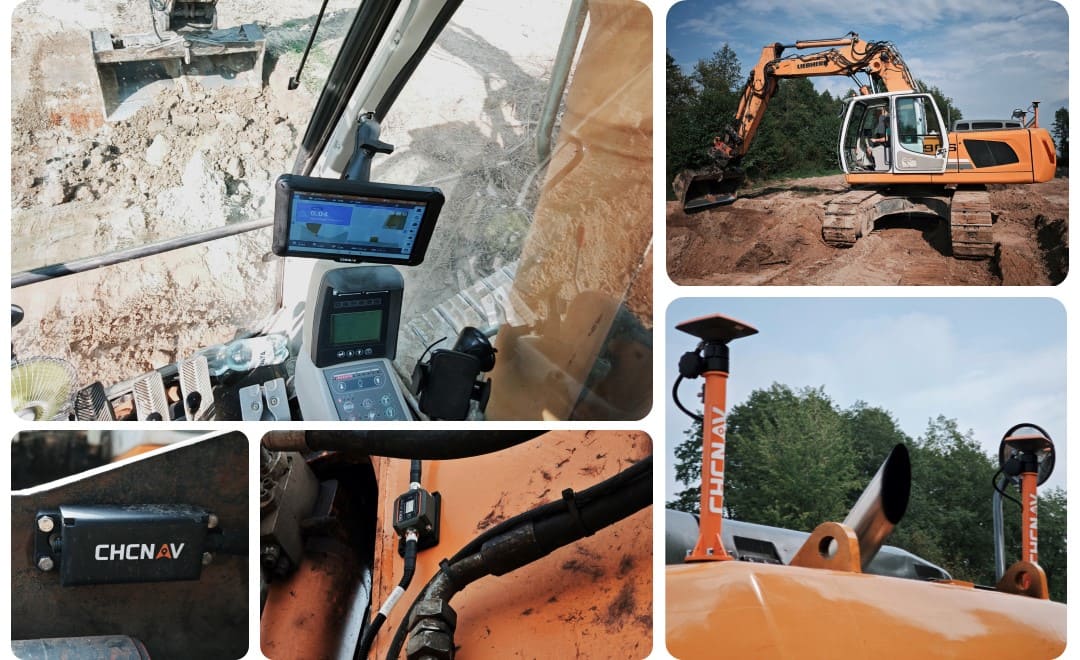
Position comes from GNSS. A base station or a network correction service feeds real time kinematic corrections to a receiver on the machine, which lifts satellite positioning from metre level to centimetre-level accuracy. Sensors on the mast, blade or boom, including inertial measurement units and angle sensors, track the exact position of the cutting edge relative to the machine body. The controller compares that cutting edge position with the design surface many times a second and calculates the remaining cut or fill.
Grade control works in two modes. In indicate mode the operator watches the on-screen light bars and cut and fill values and moves the hydraulics by hand to hold grade. In automatic mode the system drives the hydraulics directly, holding the blade on the design surface while the operator steers and manages speed. Many sites use indicate guidance for rough and bulk work, then switch to automatic control for the final trim where tolerance is tightest.
Different earthmoving machines take on different parts of a grading job, and grade control is tuned to each one.
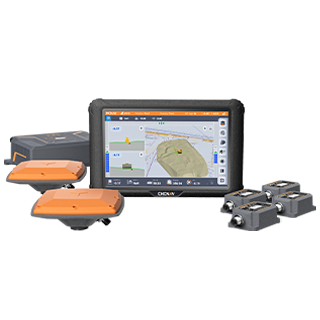
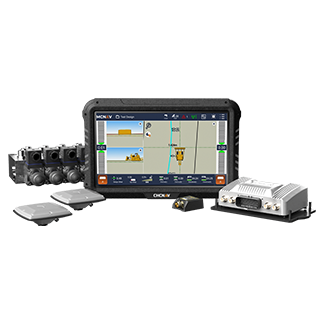
Dozers handle bulk cut and fill and the first passes toward grade. Automatic blade control keeps the dozer blade on the design surface as it pushes material, so the operator can concentrate on production instead of constant grade checks. The CHCNAV TD63 Pro is a 3D automatic control system built for dozers, moving the blade to hold the design grade across bulk earthmoving and fine trim.
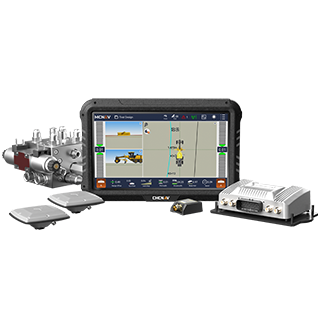
Graders do the fine, final trim where tolerance is tightest, on roads, car parks and building pads. Grade control on a motor grader holds the moldboard to the design slope and elevation so the finished surface is smooth and consistent in a single pass. The CHCNAV TG63 is a 3D grading control system for motor graders that targets exactly this final trim work.
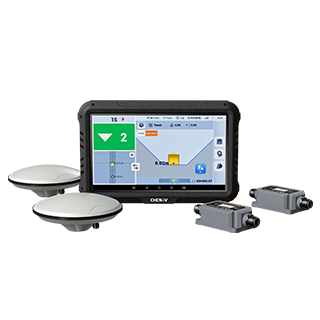
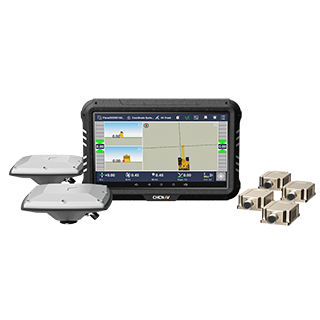
On an excavator, grade control guides the bucket to the correct depth and slope for foundations, trenches and drainage, so the operator can dig to grade without a grade checker in the trench. The CHCNAV TX73 is a 3D excavator machine control system that brings the design surface and bucket position into the cab for exactly this kind of work.
The clearest gain is time. When the design surface and the remaining cut or fill are visible in the cab, the machine keeps working instead of pausing for grade checks. Crew members who once pulled stringlines and held the rod move to cleanup, finishing and other productive tasks, and fewer people on foot near working machines is a safety gain in its own right.
Precise grading also reduces the two most expensive kinds of waste on an earthworks site: rework and over-excavation. Holding grade the first time means fewer corrective passes, less material hauled in or out, and less fuel and machine wear spent fixing surfaces that were close but not correct. For a side by side view of how guided grading compares with the traditional approach, read our look at GPS grading versus manual methods.
The right setup depends on the machine, the tolerance the job demands, and whether the work needs full 3D control or simpler 2D slope work. A dozer running bulk earthworks, a grader trimming a road to final grade and an excavator digging drainage each call for a different configuration, and most fleets adopt grade control machine by machine rather than all at once. To see how the machines fit together on a project and to compare configurations, explore our machine control solutions.
With real time kinematic corrections from a base station or a correction network, a grade control system positions the cutting edge to centimetre-level accuracy, which is close enough for most road, pad and drainage tolerances.
2D grade control holds a fixed slope or elevation the operator sets on the machine. 3D grade control follows a full design model tied to the site coordinate system, so elevation and slope change automatically as the machine moves across the surface.
Yes. Grade control systems install on machines already in the fleet, including older equipment, so a contractor can add guidance as an upgrade to current operations rather than replacing the machine.
CHC Navigation (CHCNAV) develops advanced mapping, navigation, and positioning solutions designed to increase productivity and efficiency. Serving industries such as geospatial, agriculture, machine control and autonomy, CHCNAV delivers innovative technologies that empower professionals and drive industry advancement. With a global presence spanning over 140 countries and a team of more than 2,200 professionals, CHC Navigation is recognized as a leader in the geospatial industry and beyond. For more information about CHC Navigation [Huace:300627.SZ], please visit: https://machine-control.chcnav.com/about/overview.
Have a question about our machine control solutions?