
24 Jun 2026
Earthworks live or die on one thing: getting the ground to the right level. Machine guidance systems are the technology that takes a design grade and puts it in front of the operator in real time, so the cut and fill match the plan instead of the stake line and the gut feel. The question most contractors face is not whether to add guidance, but which level of it to invest in. The practical fork in the road is 2D versus 3D grade control. This guide explains how each one works, where it fits, and how to choose for excavators, dozers and graders.
An earthworks machine guidance system connects three things: the project design, the position of the machine's cutting edge, and a display the operator can act on. Sensors track where the blade or bucket is, the system compares that position against the target grade, and it tells the operator whether to raise, lower or hold. On more capable setups, the system drives the hydraulics directly and holds the grade automatically.
That basic loop is the same whether the system is 2D or 3D. What changes between them is the reference: how the system knows where "the right level" actually is. That single difference shapes cost, accuracy, the kind of work each one suits, and how much survey support a project needs.
A 2D machine guidance system controls elevation and slope against a fixed reference rather than a full site model. The reference is usually a rotating laser plane, a sonic tracer following a string line or kerb, or the machine's own slope sensors. The operator sets a target depth and cross slope, and the system keeps the blade or bucket on that plane as the machine works.
The strength of 2D is simplicity and value. It excels on work that has a consistent grade and slope across an area: car parks, building pads, trench inverts, sub-base preparation, and flat or single-slope surfaces. Setup is fast, the hardware cost is lower, and an operator can be productive quickly. The limit is in the name. A 2D system holds one plane at a time. When the design has varying grades, crowns, transitions or curved surfaces, the operator has to keep resetting the reference, and complex shapes become slow and error prone.
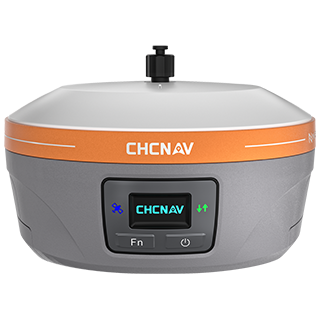
A 3D machine control system replaces the fixed plane with the full project model. It positions the machine in three dimensions, typically with a GNSS receiver on the machine, and compares the cutting edge against the design surface at that exact location. Because the system knows where the machine is on the site, it can call the correct target grade anywhere, including across slopes that change, crowns, drainage falls and curved alignments, with no need to move stakes or reset a laser.
This GNSS approach is why the technology is often called GPS machine control. The receiver fixes the machine to site coordinates, real time corrections bring that fix to centimeter-level accuracy, and the design model supplies the target at every point. The payoff is the reach of the work it covers: complex earthworks, road and highway formation, drainage, and large sites where survey stakes would otherwise drive the pace. The trade-off is a higher hardware investment and the need for a proper 3D design model and a site correction source, whether a base station or a network.
For deep or signal-shadowed work such as boxed excavations, some sites pair GNSS with a total station or use a robotic instrument to track the machine where the sky view is blocked. The design model stays the same; only the way the machine is positioned changes.
| Factor | 2D grade control | 3D machine control |
|---|---|---|
| Reference | Fixed plane: laser, string line or slope sensor | Full 3D design model tied to site position |
| Positioning | Local, relative to the set reference | GNSS or GPS machine control, often with corrections |
| Best-fit work | Flat pads, single slopes, trenches, sub-base | Variable grades, road formation, drainage, complex sites |
| Survey support | Stakes or a benchmark for the reference | Design model and a correction source, fewer stakes |
| Investment | Lower entry cost, fast setup | Higher cost, broader range of work covered |
The two are not rivals so much as steps on a path. Many contractors run 2D on machines doing repetitive flat work and 3D on the machines shaping the design, and some systems let a contractor start with 2D and upgrade the same machine to 3D as the work demands it.
The right level of guidance also depends on the machine and the job it does in the earthworks sequence.
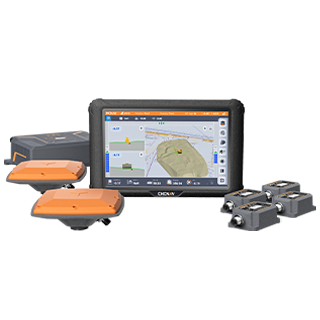
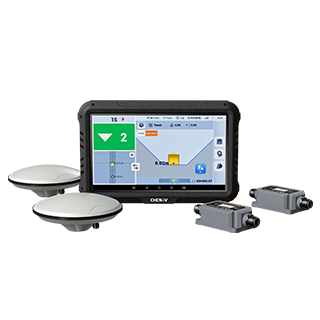
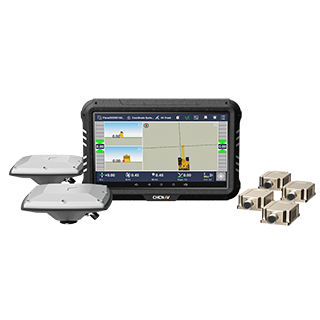
Excavators benefit from guidance on trenching, batter slopes, foundation digs and final trim. A 3D guidance system shows the bucket position against the design so the operator can dig to depth and slope without a grade checker in the trench. Our TX73 3D guidance system for excavators covers this role, and for smaller projects the EasyNAV EMG100 offers an entry point into excavator guidance. For a deeper look at the excavator options, see our guide on GPS machine control for excavators.
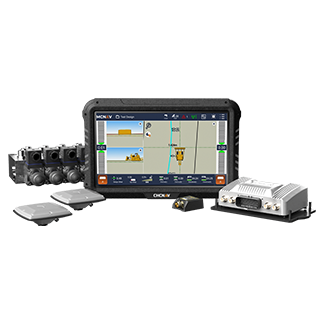
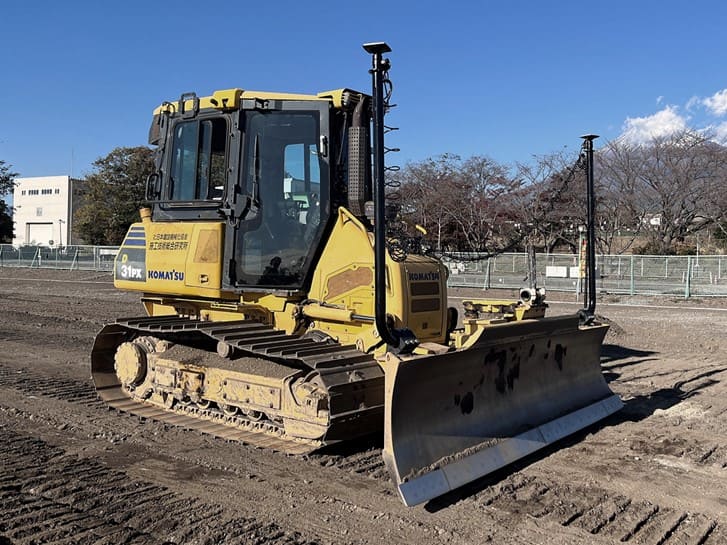
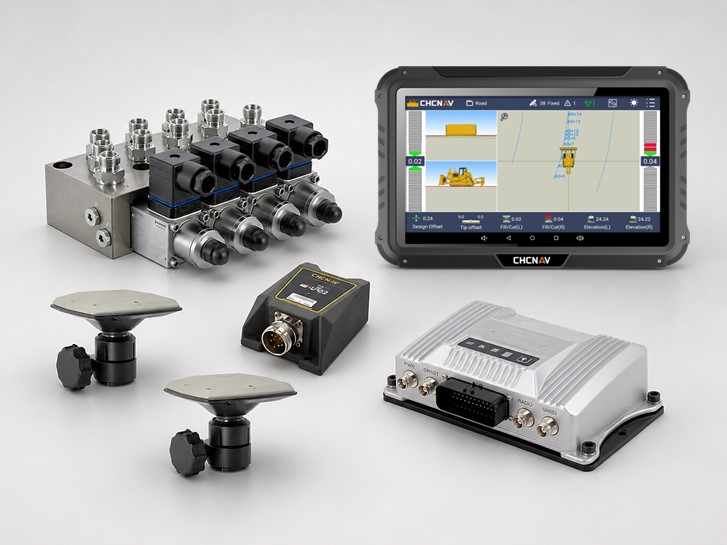
Dozers do the bulk earthmoving and the final grade, which is where automatic control earns its keep. A 3D automatic system holds the blade on the design surface and adjusts the hydraulics in real time, cutting rework on long pushes and fine grade alike. Our TD63 Pro automatic control system for dozers is built for this work.
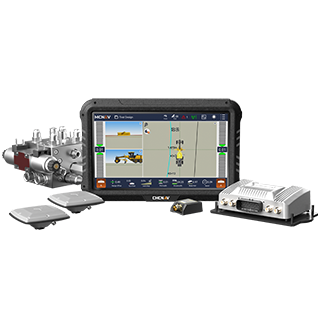
Motor graders set the precise final surface, where small elevation and cross slope errors show up in the finished level. A 3D grading control system holds the moldboard to the model across crowns, super-elevation and drainage falls. Our TG63 3D grading control system for graders targets this final-grade role.
A short set of questions usually settles it:
When comparing offers, it also helps to look past a single machine. A 3D machine control company worth working with should support a mixed fleet, share one design model across excavator, dozer and grader, and offer a clear upgrade path rather than a different system for every machine.
CHC Navigation develops 2D and 3D machine control systems for the full earthworks fleet, from excavator guidance to automatic blade control on dozers and graders, all working from a shared design model and GNSS positioning. The product range and the supporting workflow sit inside our machine control solutions hub, which brings the hardware, corrections and design data together so a contractor can match the level of guidance to each machine and each stage of the job.
For teams weighing the step up, the practical path is to map the work first: identify which surfaces are simple enough for 2D, which need a 3D model, and which machines carry the final grade, then specify the guidance level machine by machine rather than all at once.
CHC Navigation (CHCNAV) develops advanced mapping, navigation, and positioning solutions designed to increase productivity and efficiency. Serving industries such as geospatial, agriculture, machine control and autonomy, CHCNAV delivers innovative technologies that empower professionals and drive industry advancement. With a global presence spanning over 140 countries and a team of more than 2,200 professionals, CHC Navigation is recognized as a leader in the geospatial industry and beyond. For more information about CHC Navigation [Huace:300627.SZ], please visit: https://machine-control.chcnav.com/about/overview.
Have a question about our machine control solutions?